

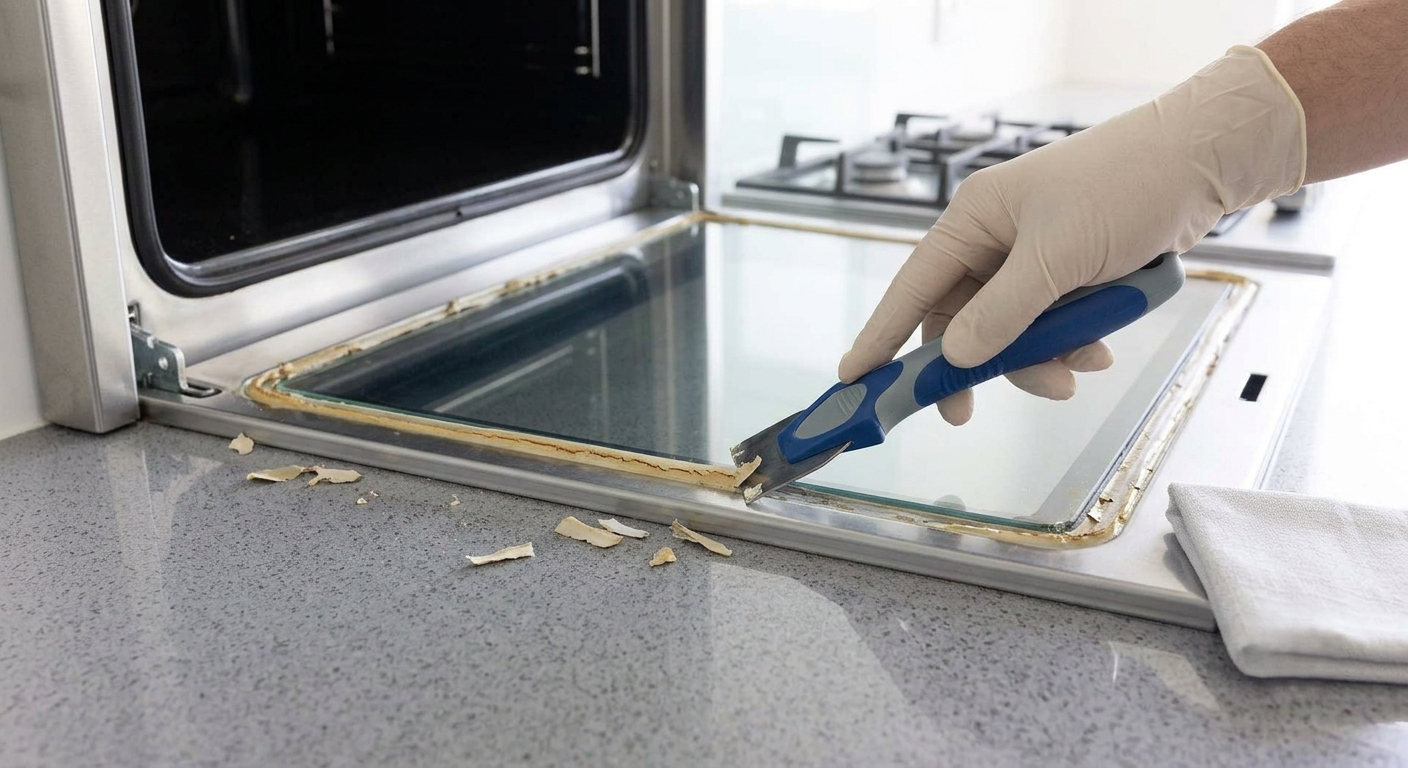
Oven glass doors take on a level of heat exposure that no other glass surface in the home experiences, and the silicone sealant along their edges eventually shows it — cracking, discoloring, or hardening into a stubborn residue that’s harder to shift than typical household silicone. Learning how to remove silicone from glass oven doors safely matters more here than almost anywhere else, since the wrong tool, product, or technique can scratch heat-treated glass or leave behind fumes that aren’t safe near a cooking appliance.
These 7 proven steps walk through a careful, effective method for removing old or damaged silicone from oven glass doors without risking the glass or your kitchen air quality.
Key Takeaways
- Oven glass doors are heat-treated and can be more prone to visible scratching than standard window glass.
- Always let the oven cool completely and unplug it before attempting any silicone removal.
- Plastic scrapers are the only safe tool to use directly on oven glass.
- Ventilation is essential when using solvent-based removers near a kitchen appliance.
- Only heat-resistant, oven-rated silicone should be used when resealing.
Why Oven Glass Doors Require Extra Care
Unlike shower doors or windows, oven glass doors are specifically manufactured to withstand extreme heat, which means they’re often coated or tempered in ways that make them more sensitive to certain solvents and abrasive tools. Repeated heating and cooling cycles can also make old silicone around the door’s edges brittle and prone to cracking into small, hard-to-remove pieces.
Because of the appliance itself, safety is just as important as technique here — any method to remove silicone from glass oven doors safely needs to account for proper cooling time, ventilation, and avoiding products that could react poorly with heat residue or leave fumes near a cooking surface.
Tools and Materials You’ll Need
- Plastic razor blade or silicone-safe scraper
- Isopropyl alcohol (90% or higher)
- White vinegar (optional, for softening)
- Microfiber cloths
- Rubber gloves and safety glasses
- Heat-resistant, oven-rated silicone (for resealing)
The 7 Proven Steps to Remove Silicone from Glass Oven Doors Safely
Step 1: Let the Oven Cool Completely
Before doing anything else, make sure the oven has fully cooled and is unplugged or switched off at the breaker if possible. Working on a warm oven door not only poses a burn risk but can also cause solvents to evaporate too quickly to soften the silicone properly.
Step 2: Ventilate the Kitchen
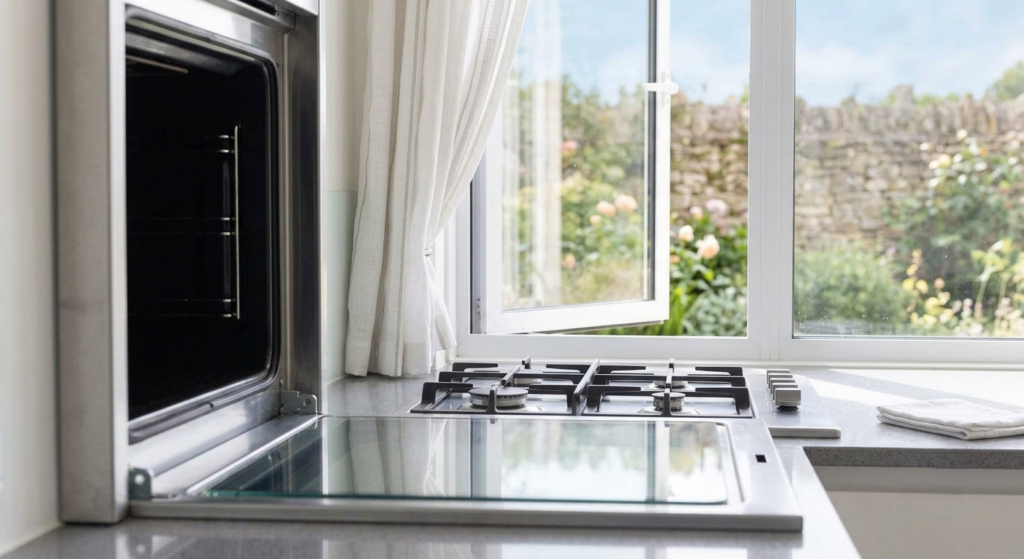
Open a window or turn on the exhaust fan before applying any solvent-based product. This is especially important in a kitchen, where fumes can linger near food preparation areas if airflow is limited.
Step 3: Soften the Old Silicone
Apply white vinegar or a silicone remover gel directly to the old sealant and let it sit for 15–20 minutes. Because oven door silicone can become especially brittle from repeated heat cycles, this softening step is critical to avoid it snapping into small fragments during removal.
Step 4: Scrape at a Low, Flat Angle
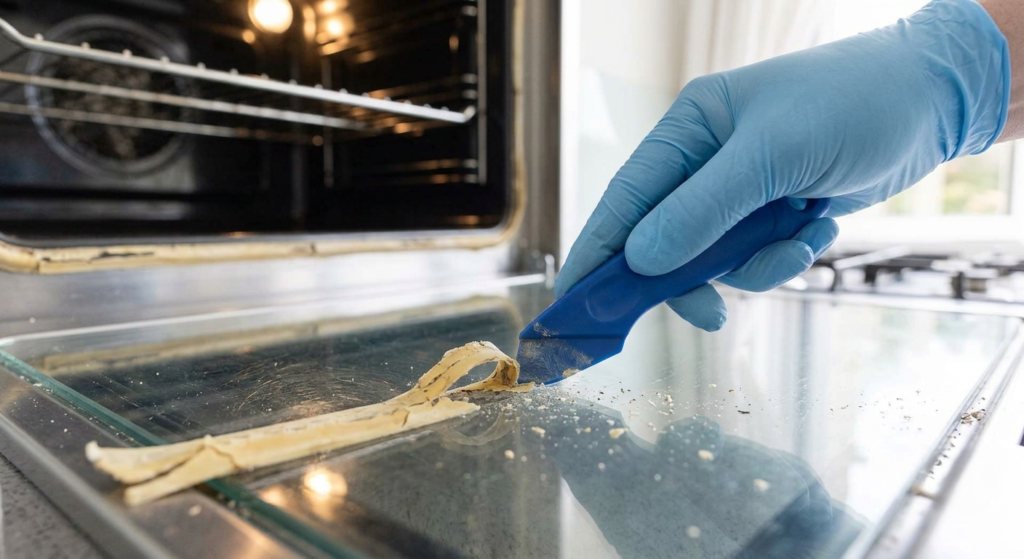
Using a plastic scraper, hold it nearly flat against the glass — around a 15-degree angle — and push gently in one direction. Work in small sections along the door’s edge, being especially careful near any hinges or seals that shouldn’t be disturbed.
Step 5: Dissolve Leftover Residue
Once the bulk of the silicone is removed, soak a microfiber cloth in isopropyl alcohol and press it against any remaining film for a few minutes before wiping in small circular motions. This step is what restores the glass to a clean, streak-free finish.
Step 6: Clean and Inspect the Door
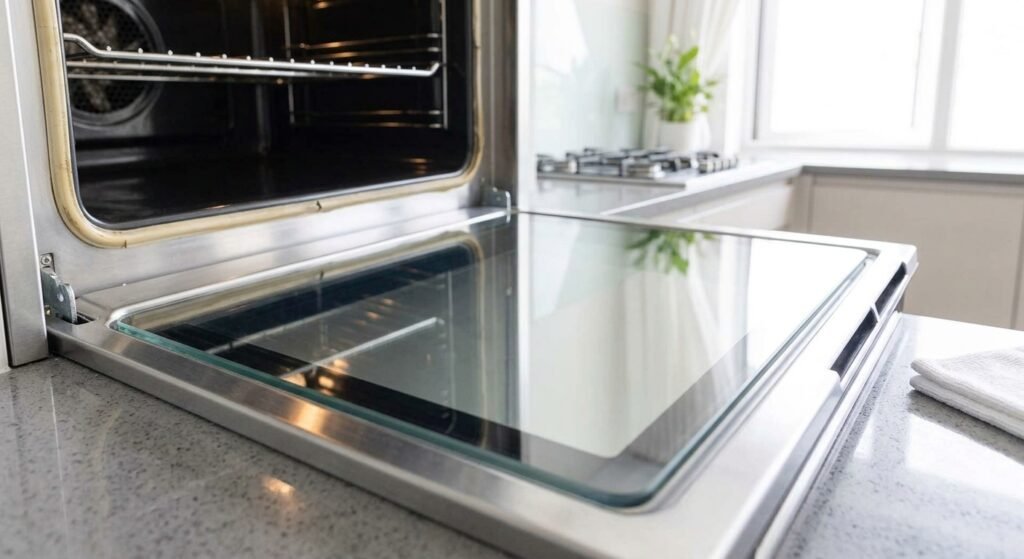
Wipe the entire door with a clean, dry cloth and inspect it under angled light, which reveals any leftover residue or haze more clearly than looking at it straight on. Pay close attention to corners and edges where silicone tends to collect.
Step 7: Allow Full Drying Before Resealing
If you plan to apply new silicone, allow the door to air dry completely for at least an hour in a well-ventilated kitchen. Only use a heat-resistant, oven-rated silicone sealant, since standard silicone can degrade quickly or even smoke when exposed to oven-level heat.
Common Mistakes to Avoid
- Working on a hot or recently used oven. Always confirm the oven has fully cooled before starting.
- Using a metal blade on oven glass. This risks permanent scratches on heat-treated glass.
- Skipping ventilation. Fumes from solvents can be more noticeable and less pleasant in an enclosed kitchen space.
- Using standard silicone for resealing. Only oven-rated, heat-resistant silicone should be used near a cooking appliance.
Conclusion
Learning how to remove silicone from glass oven doors safely comes down to combining the right technique with proper safety precautions: cooling the oven fully, ventilating the kitchen, softening the silicone before scraping, and using only heat-rated products for any resealing. Following these 7 proven steps in order helps you avoid scratches, damage, or unsafe fumes, leaving your oven door clean and ready for a fresh, durable seal.
Frequently Asked Questions
Is it safe to remove silicone from an oven door while it’s still warm? No, the oven should be fully cooled and unplugged before attempting any silicone removal, both for safety and to allow softening agents to work properly.
What is the safest tool to remove silicone from an oven glass door? A plastic razor blade or scraper held at a low angle is the safest choice, since metal blades can scratch heat-treated oven glass.
Can isopropyl alcohol be used on oven glass doors? Yes, isopropyl alcohol is effective for dissolving thin silicone residue on oven glass and evaporates quickly without leaving streaks.
What type of silicone should be used to reseal an oven door? Only heat-resistant, oven-rated silicone sealant should be used, since standard silicone can degrade or smoke when exposed to oven-level heat.
Why does silicone on oven doors become brittle faster than elsewhere? Repeated heating and cooling cycles cause oven door silicone to dry out and crack more quickly than silicone in cooler, more stable environments.