

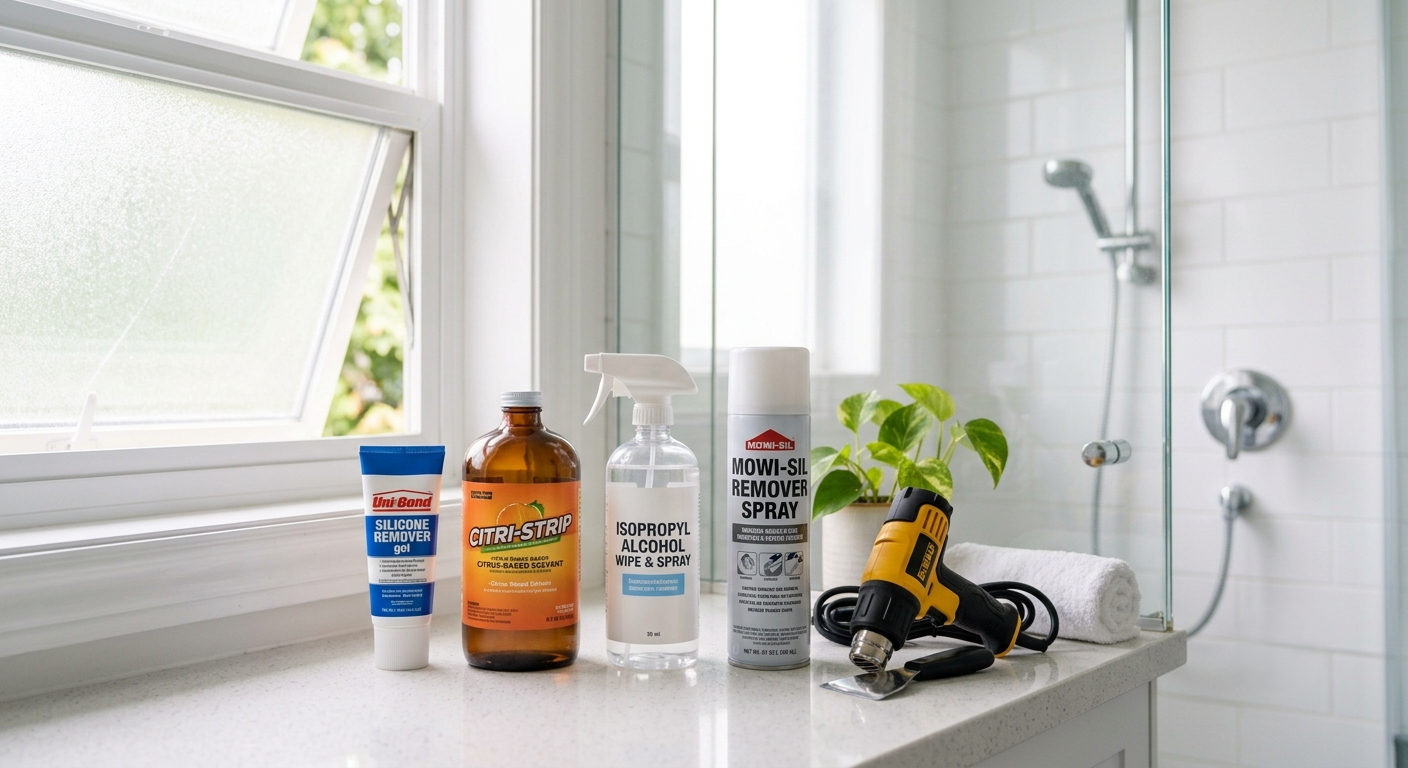
Bathrooms present a unique challenge for silicone removal: glass shower doors, glazed tile, chrome fixtures, and grout lines all sit close together, and not every remover is safe for all of them. Choosing the best silicone removers for bathroom glass and tiles means understanding which formula matches your surface, how long it needs to sit, and how well it protects nearby materials like grout and metal trim.
This guide ranks the top 5 silicone removal methods for bathroom use, explains what makes each one suited to specific surfaces, and helps you pick the right option for your job.
Key Takeaways
- Gel-based removers work best on vertical surfaces like shower glass, since they cling rather than drip.
- Citrus-based solvents are gentler on tile and grout than stronger chemical formulas.
- Alcohol-based solvents are the most reliable finishing step for a streak-free result on glass and chrome.
- Spray removers are convenient for small spots but work best on horizontal surfaces.
- Heat-assisted removal is the most effective option for stubborn, fully cured silicone.
What Makes a Silicone Remover Suitable for Bathrooms
Bathroom surfaces differ from other parts of the home in a few important ways. Glass shower doors and mirrors need a remover that won’t leave streaks or scratches, while tile and grout require a product gentle enough not to discolor or erode grout lines. Humidity and limited ventilation also mean fume-heavy products need extra airflow to be used safely and comfortably.
The best silicone remover for bathroom glass and tiles typically balances three factors: strong enough to break down cured silicone, gentle enough not to damage glass or grout, and formulated to cling to vertical surfaces rather than run off before it can work.
The Top 5 Silicone Removal Methods for Bathroom Glass and Tiles
1. Gel-Based Silicone Removers
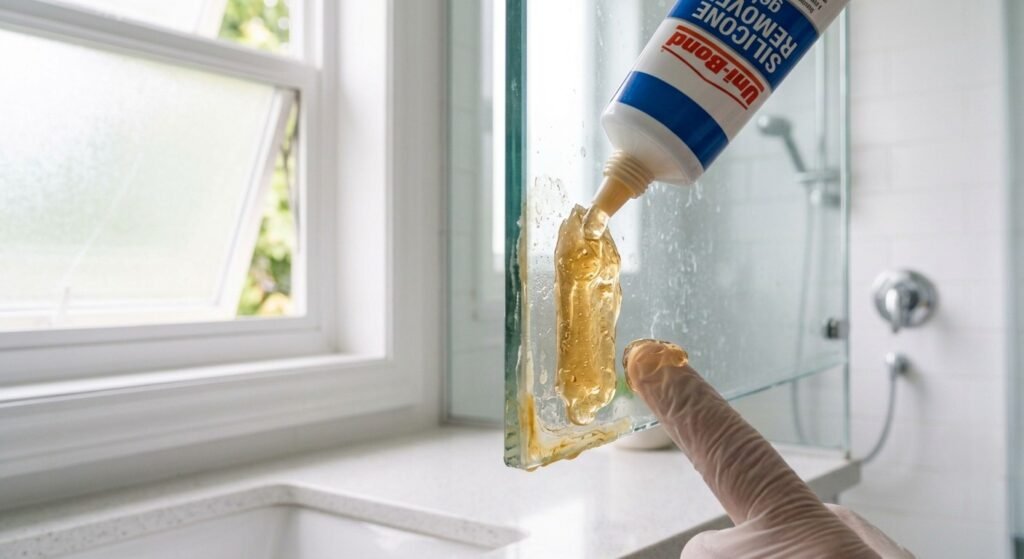
Gel formulas are thick enough to stay in place on vertical surfaces like shower doors and tiled walls, which makes them one of the most practical choices for bathroom use. They typically need 10–20 minutes of dwell time before the softened silicone can be scraped away.
Best for: Shower glass, vertical tile surfaces, and hardware areas like hinges and brackets.
2. Citrus-Based Solvent Remover
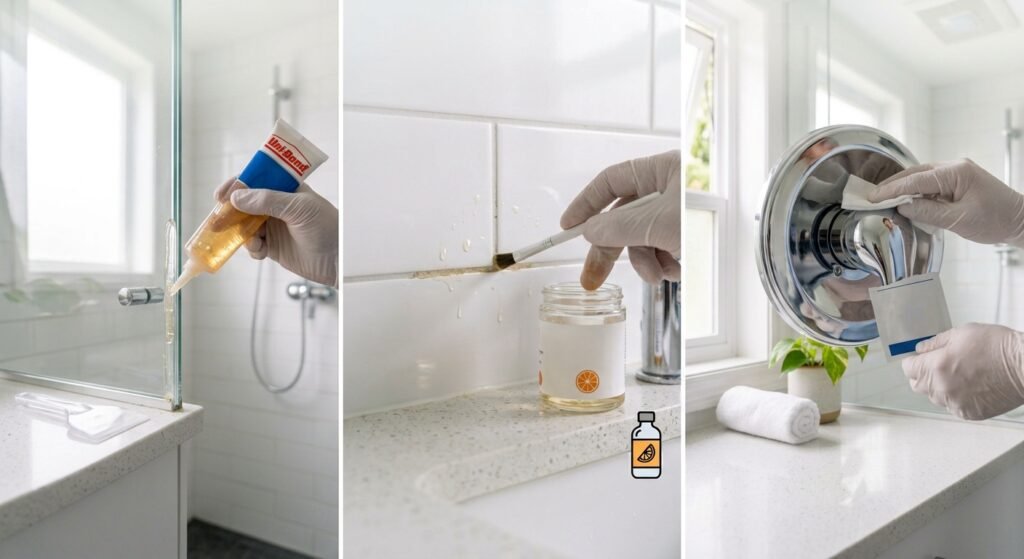
Citrus-based removers use natural solvents like d-limonene to break down silicone without the harsh fumes of stronger chemical products. They tend to be milder, which makes them a good fit for tile and grout, though they may need longer dwell times on thick, fully cured silicone.
Best for: Grout lines, tile surfaces, and bathrooms with limited ventilation.
3. Alcohol-Based Solvent
Isopropyl alcohol and similar solvents are excellent for dissolving thin residue and film after the bulk of silicone has already been scraped away. They evaporate quickly and don’t leave streaks, making them a reliable finishing step regardless of which primary remover was used.
Best for: Final residue cleanup on glass and chrome fixtures.
4. Spray-On Remover
Spray formulas are convenient for smaller spots or light residue but tend to run on vertical surfaces, making them better suited to horizontal areas like window sills or countertops near a bathroom sink.
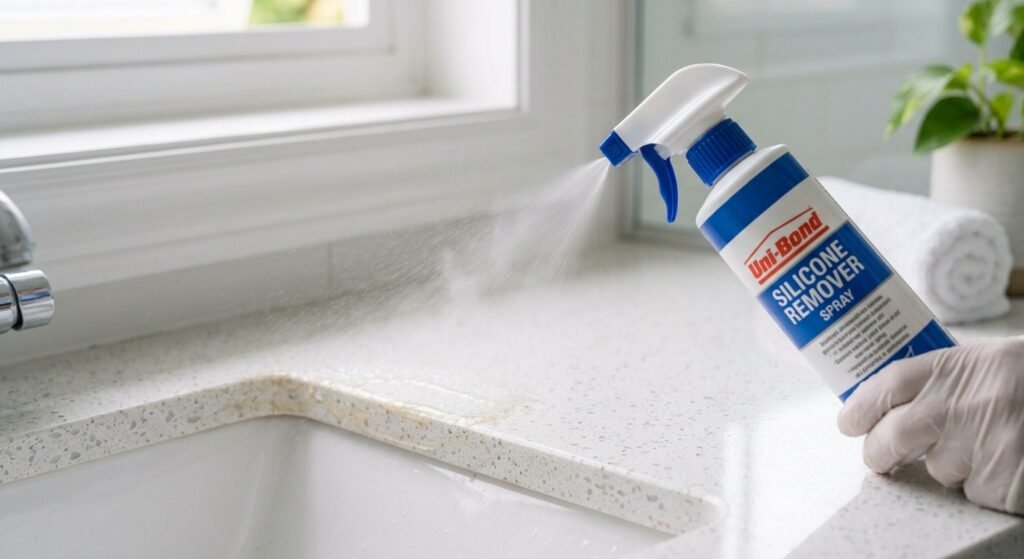
Best for: Small residue spots, horizontal surfaces, quick touch-ups.
5. Heat-Assisted Removal
For stubborn, fully cured silicone that resists softening agents alone, a hairdryer or heat gun on medium heat can make a significant difference. Applying gentle heat for 2–3 minutes softens the silicone enough for a plastic scraper to lift it cleanly, and this method pairs well with any of the solvents above for extra-tough spots.
Best for: Old, fully hardened silicone that hasn’t responded to gel or solvent alone.
How to Choose the Right Remover for Your Bathroom
For Glass Shower Doors and Mirrors
Gel-based removers are generally the best fit, since they cling to vertical glass without dripping, and won’t leave the fine scratches that abrasive products can cause.
For Tile and Grout
Citrus-based solvents tend to be gentler on grout color and sealant, especially compared to stronger chemical formulas that can sometimes lighten or discolor grout with repeated use.
For Chrome and Metal Fixtures
Alcohol-based solvents are typically safe on most metal finishes and won’t dull chrome the way some heavier degreasers can.
How to Use a Silicone Remover Safely in a Bathroom
- Ventilate the space. Open a window or run an exhaust fan before applying any solvent-based product.
- Test a small area first. Apply the product to a hidden section of tile, grout, or glass to check for discoloration.
- Follow dwell time instructions. Most removers need 10–30 minutes to properly soften silicone before scraping.
- Use a plastic scraper. Regardless of which remover you choose, always finish with a plastic tool to avoid scratching glass or chipping tile glaze.
- Rinse and dry thoroughly. Leftover product residue can affect how well new silicone bonds if you’re planning to reseal.
Common Mistakes to Avoid
- Using the wrong remover type on grout. Strong chemical solvents can sometimes discolor colored grout over repeated use.
- Skipping ventilation. Bathrooms often have limited airflow, making proper ventilation especially important with solvent-based products.
- Not testing on a hidden area first. This is the easiest way to avoid an unpleasant surprise on visible tile or glass.
- Scraping before the product has fully softened the silicone. Rushing this step increases the risk of scratches.
Conclusion
Finding the best silicone remover for bathroom glass and tiles comes down to matching the method to the surface and the condition of the silicone: gel formulas for vertical glass, citrus-based solvents for tile and grout, alcohol-based products for a streak-free finish, spray removers for quick touch-ups, and heat-assisted removal for the toughest, fully cured spots. Testing products first, ventilating properly, and following recommended dwell times ensures a clean, damage-free result across every surface in your bathroom.
Frequently Asked Questions
What is the safest silicone remover for glass shower doors? Gel-based removers are generally the safest choice for shower doors, since their thick consistency clings to vertical glass without dripping and reduces the risk of streaking.
Can silicone remover damage tile grout? Some strong chemical solvents can discolor colored grout over time, which is why citrus-based or milder formulas are often recommended for tile and grout surfaces.
Is isopropyl alcohol a good silicone remover for bathrooms? Isopropyl alcohol works best as a finishing step to dissolve thin residue after the main silicone deposit has been removed, rather than as a standalone remover for thick, cured silicone.
Do silicone removers need good ventilation in a bathroom? Yes, most solvent-based silicone removers release fumes, so opening a window or running an exhaust fan is recommended, especially in smaller or less ventilated bathrooms.
How long should silicone remover sit before scraping? Most products need 10 to 30 minutes of dwell time, depending on the formula and how thick or fully cured the silicone deposit is.