

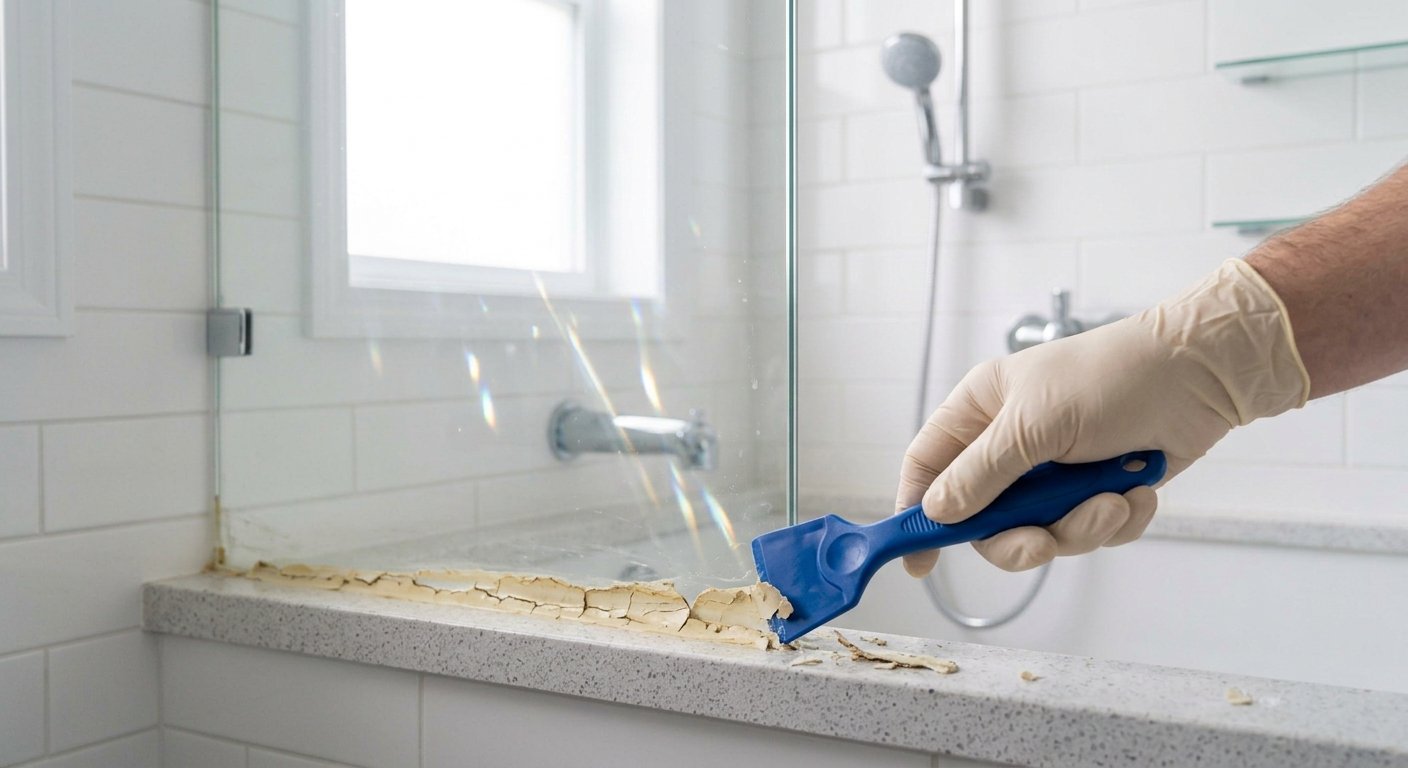
The caulk line where a bathtub glass panel meets the tub edge or surrounding tile takes on more wear than almost any other seal in the home, thanks to constant water exposure, humidity, and temperature swings. Once it starts cracking, yellowing, or pulling away, it’s time to clean silicone caulk from bathtub glass panels completely before applying a fresh seal. Doing this properly protects the glass from scratches and ensures the new caulk actually bonds well.
This guide covers a complete, step-by-step method for removing old caulk from bathtub glass panels safely, from the first cut to the final polish.
Key Takeaways
- Cutting along both edges of the caulk bead before peeling it away makes removal cleaner and easier.
- Softening old caulk with heat or a solvent reduces the risk of scratching bathtub glass panels.
- Plastic scrapers, never metal blades, should be used directly on glass.
- Leftover residue must be fully dissolved before new caulk is applied, or the fresh seal may fail early.
- Full drying time before resealing is just as important as the removal process itself.
Why Bathtub Glass Panels Need Careful Caulk Removal
Bathtub glass panels are more exposed to moisture and cleaning products than caulk in drier areas of the home, which speeds up wear and often leaves the old bead brittle by the time it needs replacing. At the same time, glass panels are more visible and more prone to scratching than tile or grout, which means the method used to clean silicone caulk from bathtub glass panels needs to be gentler than a typical caulk removal job elsewhere in the bathroom.
Skipping proper removal — or rushing it with the wrong tools — often leads to two common problems: scratched glass that’s permanently visible, and a new caulk line that fails early because it wasn’t applied to a fully clean surface.
Tools and Materials You’ll Need
- Sharp utility knife
- Plastic razor blade or silicone-safe scraper
- Isopropyl alcohol (90% or higher)
- White vinegar (for softening)
- Microfiber cloths
- Hairdryer or heat gun (optional)
- Rubber gloves and safety glasses
Step-by-Step: How to Clean Silicone Caulk from Bathtub Glass Panels
Step 1: Cut Along Both Edges of the Caulk Line
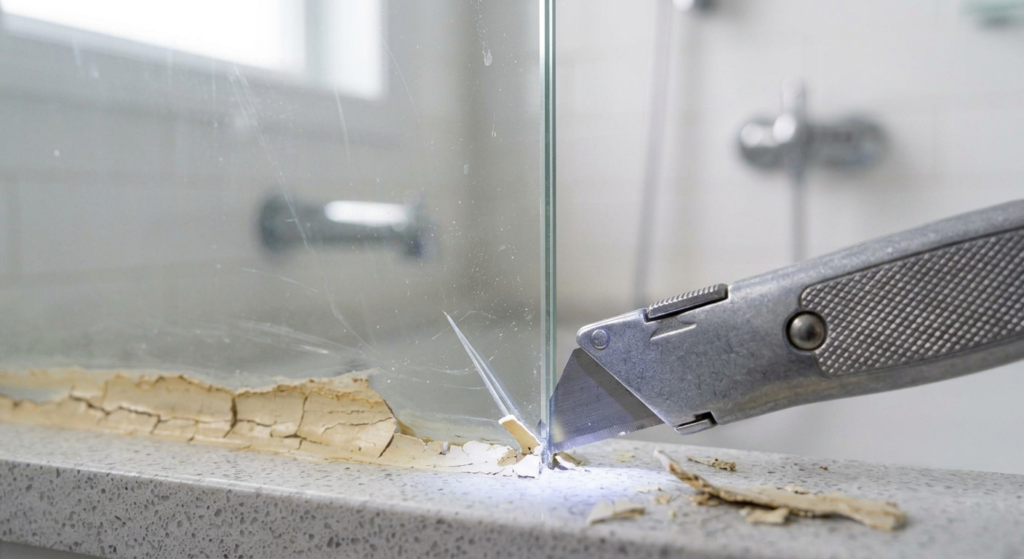
Using a sharp utility knife, score along both sides of the caulk bead, where it meets the glass panel and the tub or tile edge. This separates the caulk from both surfaces at once, allowing it to be peeled away in longer strips rather than picking it apart in small, frustrating pieces.
Keep the blade angled shallow to avoid nicking the glass edge or surrounding tile.
Step 2: Soften the Caulk Before Removing It
Fully cured caulk on bathtub panels is often stiff and prone to snapping into smaller pieces rather than peeling cleanly. Softening it first makes a noticeable difference:
- Heat method: Apply gentle heat with a hairdryer for 1–2 minutes along the bead.
- Vinegar soak: Apply white vinegar and let it sit for 15–20 minutes to weaken the bond.
Step 3: Peel and Scrape the Bulk of the Caulk
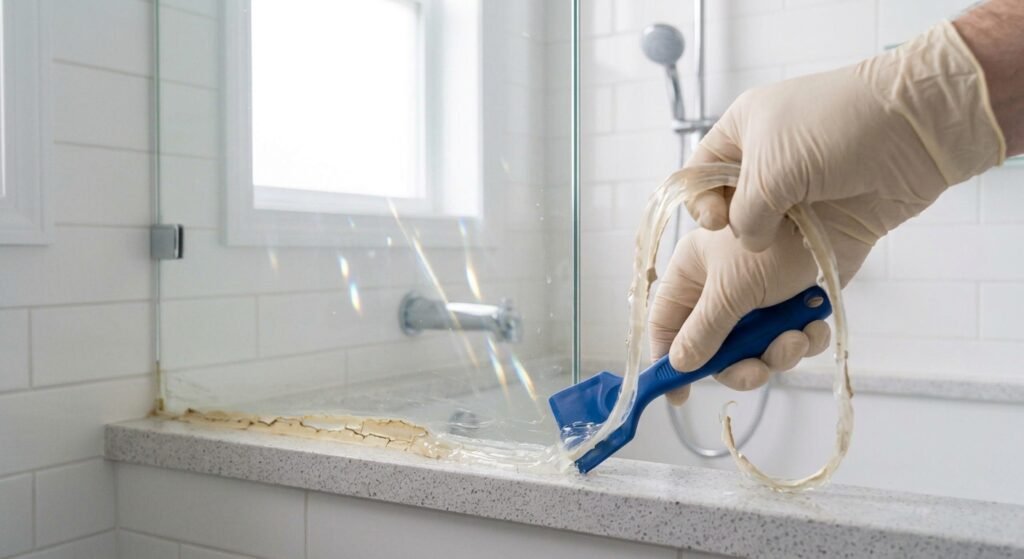
Once softened, gently peel the scored caulk strip away by hand where possible. For sections that resist pulling, use a plastic scraper held at a low, nearly flat angle against the glass, working in one direction rather than sawing back and forth.
Move slowly near the base of the panel, where caulk tends to be thickest and most stubborn.
Step 4: Dissolve Leftover Residue
After the main caulk strip is removed, a thin film almost always remains on the glass. Soak a microfiber cloth in isopropyl alcohol and press it against the residue for a few minutes before wiping in small circular motions. Repeat as needed on stubborn spots.
Step 5: Clean, Dry, and Inspect
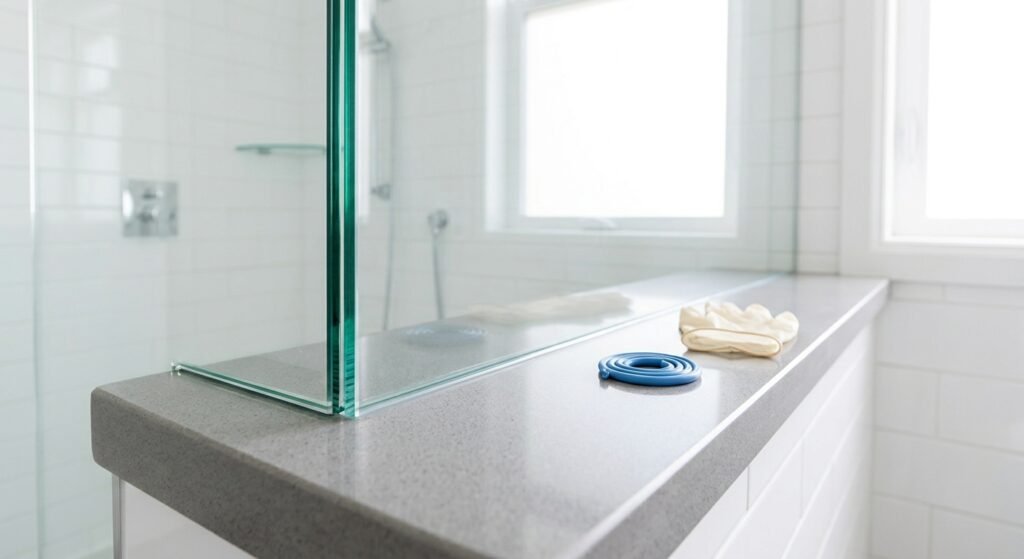
Wipe the entire panel with a clean cloth and check it under angled light, which reveals any leftover haze or missed residue more clearly than looking at it straight on. Allow the surface to air dry completely, ideally for at least an hour, before applying any new caulk.
Common Mistakes to Avoid
- Skipping the cutting step. Trying to peel caulk without scoring the edges first usually leaves more residue and torn fragments behind.
- Using a metal blade directly on the glass. This is one of the most common causes of permanent scratches on bathtub panels.
- Not fully softening the caulk before scraping. Cold, brittle caulk is far more likely to snap and leave uneven residue.
- Resealing before the surface is completely dry. This can trap moisture behind the new caulk and lead to early failure or mold growth.
Conclusion
Learning how to clean silicone caulk from bathtub glass panels properly comes down to a clear sequence: score the edges, soften the material, peel and scrape gently, dissolve any leftover residue, and allow the surface to dry fully before resealing. Taking the time to follow each step carefully protects the glass from scratches and sets up a fresh caulk line that will actually last, rather than needing to be redone again within months.
Frequently Asked Questions
What is the best way to remove old caulk from a bathtub glass panel? Scoring both edges of the caulk bead with a utility knife, softening it with heat or vinegar, and then peeling or scraping it away with a plastic tool is the safest and most effective method.
Does vinegar help remove silicone caulk from glass panels? Yes, white vinegar’s mild acidity helps break down the bond of silicone caulk, making it easier to peel or scrape away without excessive force.
Can removing old caulk scratch a bathtub glass panel? It can if a metal blade is used or if the caulk isn’t softened first; a plastic scraper held at a low angle after softening is the safest approach.
How long should a bathtub glass panel dry before new caulk is applied? Allow at least an hour of air drying in a well-ventilated bathroom to ensure no moisture remains before applying fresh silicone caulk.
Why does old caulk on bathtub glass panels crack and yellow faster than elsewhere? Constant water exposure, humidity, and temperature changes near the tub accelerate wear, which is why bathtub panel caulk often needs replacing sooner than caulk in drier parts of the home.