

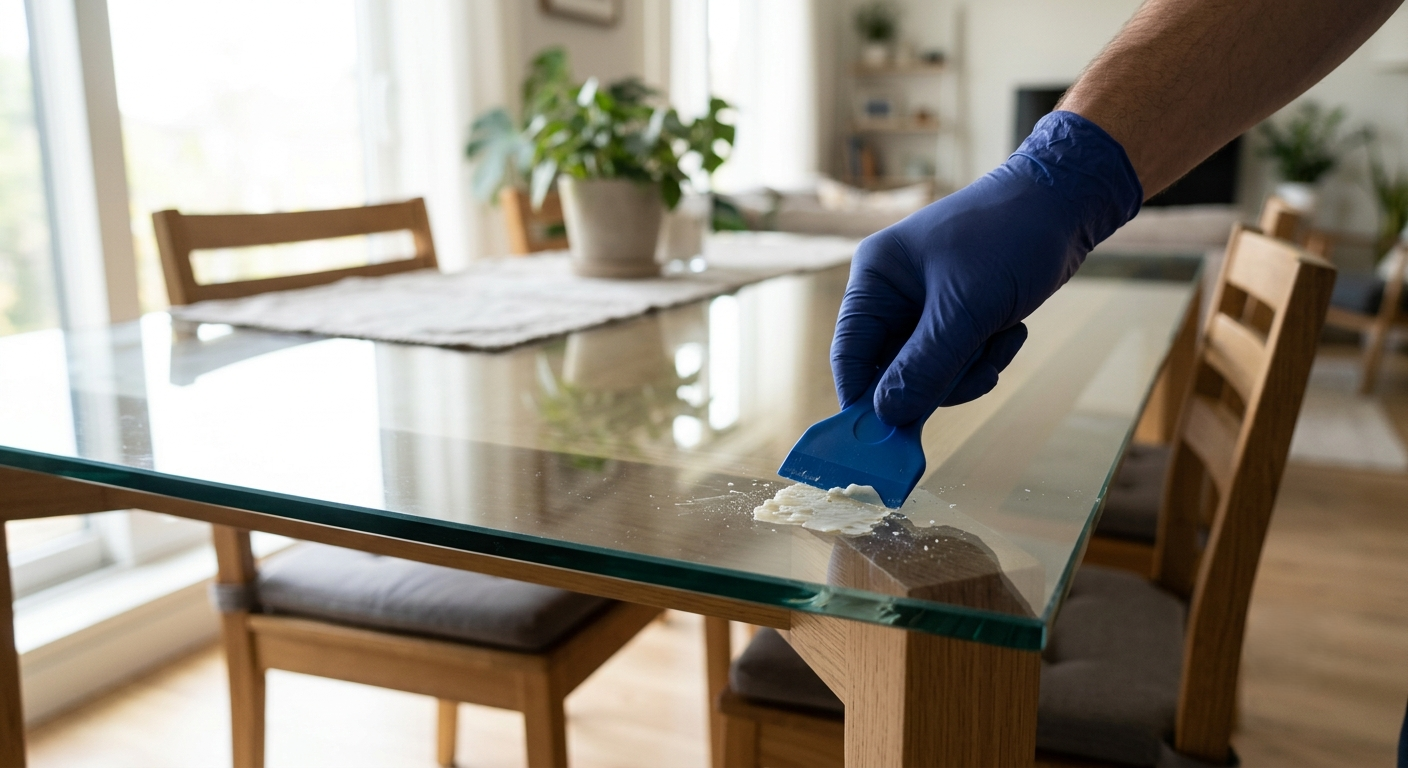
Glass tabletops are a common spot for silicone residue to show up — whether it’s from a repaired crack, a protective silicone pad that left a mark, or a spill during a DIY project nearby. Because tabletops are meant to look polished and clear, even a small patch of dried silicone stands out immediately. Removing silicone residue from glass tabletops requires a careful, low-risk approach, since these surfaces are often more visible and more delicate than something like a shower door or window frame.
This guide covers the safest, most effective way to lift silicone residue from glass tabletops without leaving scratches, haze, or streaks behind.
Key Takeaways
- Dried silicone residue on tabletops should always be softened before any scraping is attempted.
- Plastic scrapers and isopropyl alcohol are the safest combination for glass tabletop surfaces.
- Circular, gentle motions work better than heavy scrubbing for lifting residue evenly.
- A final buff with glass cleaner helps reveal any spots that need a second treatment.
- Protective pads or coasters can help prevent silicone residue from forming again in the future.
Why Glass Tabletops Need Extra Care
Unlike a shower door or window frame, a glass tabletop is typically thinner, more decorative, and viewed up close, which means any scratch or cloudy patch is far more noticeable. Tabletops are also more likely to be tempered or coated glass, which can be more sensitive to certain chemicals or abrasive tools than standard window glass.
This makes removing silicone residue from glass tabletops a job where patience and a gentle touch matter even more than usual. Rushing the process with a metal blade or strong scrubbing motion risks turning a small residue spot into a permanent, more visible flaw.
Tools and Materials You’ll Need
- Plastic razor blade or silicone-safe scraper
- Isopropyl alcohol (90% or higher)
- Soft microfiber cloths
- White vinegar (optional, for softening)
- Standard glass cleaner
- Rubber gloves
Step-by-Step: Removing Silicone Residue from Glass Tabletops
Step 1: Soften the Residue First
Even small amounts of dried silicone benefit from softening before any physical removal is attempted. Apply white vinegar or a small amount of silicone remover gel directly to the spot and let it sit for 15 minutes. This weakens the bond between the silicone and the glass, making the next steps far safer.
Step 2: Scrape Gently at a Low Angle
Using a plastic scraper, hold it nearly flat against the glass surface — around a 15-degree angle — and gently push in one direction. Avoid any sawing or back-and-forth motion, which increases friction and the risk of fine scratching on decorative glass.
Work in small sections, especially near tabletop edges, which are often more prone to chipping if too much pressure is applied.
Step 3: Dissolve Remaining Film with Alcohol
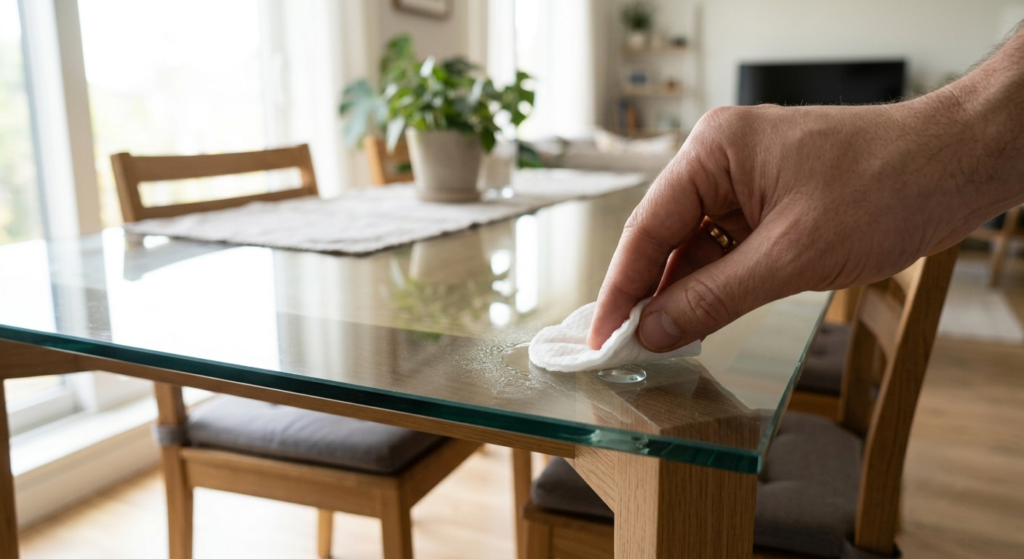
After the bulk of the residue has been scraped away, a faint film typically remains. Soak a microfiber cloth in isopropyl alcohol and press it gently against the area for a few minutes before wiping in small, circular motions. This step is what actually restores the glass to a clear, streak-free finish.
Step 4: Check for Missed Spots
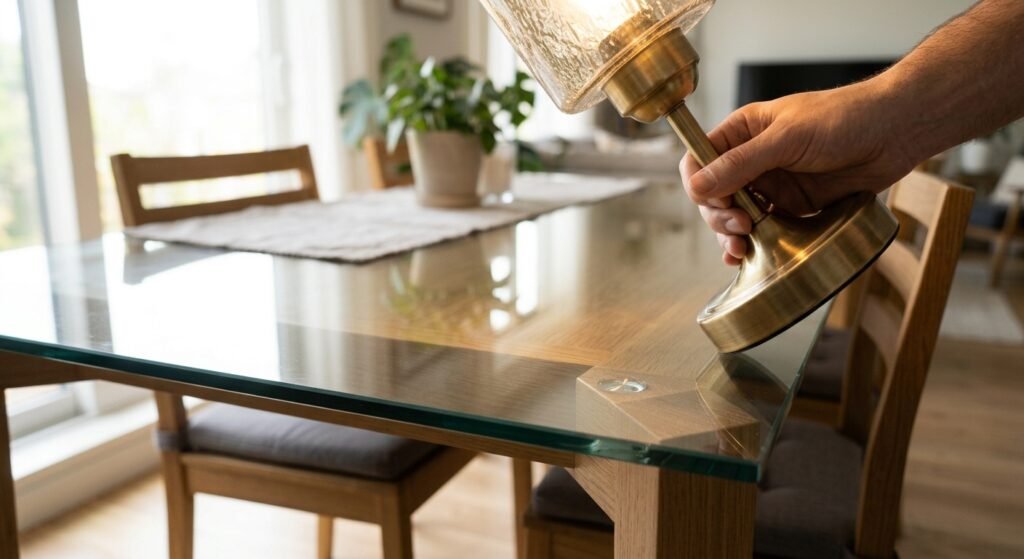
Once the surface feels smooth, inspect it under angled light rather than looking straight down at it. Angled light reveals any leftover haze or small residue spots that are easy to miss when viewed head-on.
Step 5: Polish for a Streak-Free Finish
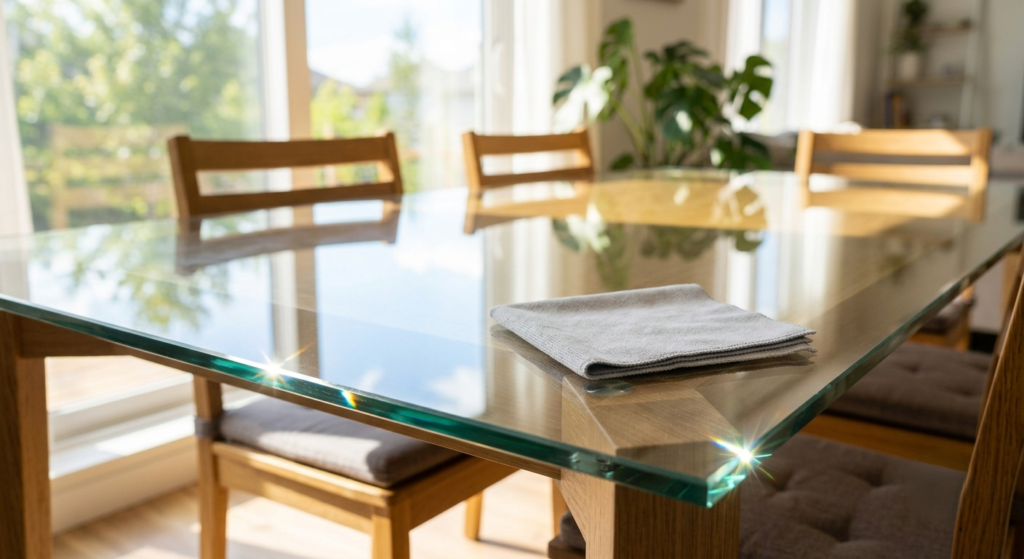
Finish with a standard glass cleaner and a dry, lint-free cloth, wiping in overlapping circular motions. This final step removes any remaining alcohol residue and restores the tabletop’s natural shine.
Preventing Future Silicone Residue on Glass Tabletops
- Use felt or rubber pads under decorative items instead of silicone adhesive pads, which can leave residue over time.
- If silicone is used for a tabletop repair, apply it carefully with painter’s tape around the edges to avoid spillover.
- Clean spills or drips promptly, before they have a chance to cure and harden onto the glass.
Common Mistakes to Avoid
- Scraping dry silicone without softening it first. This significantly increases the risk of visible scratches on decorative glass.
- Using a metal blade. Even a careful pass with metal tools can leave marks that show clearly on a polished tabletop.
- Scrubbing too hard with an abrasive cloth. This can create fine surface scratches that catch light and become permanent.
- Skipping the final polish. Without it, leftover alcohol or vinegar can leave faint streaks behind.
Conclusion
Removing silicone residue from glass tabletops is a manageable job when approached with patience: soften first, scrape gently at a low angle, dissolve any remaining film, and finish with a proper polish. Because tabletops are more visible and often more delicate than other glass surfaces in the home, taking the extra time to do this carefully pays off with a clear, scratch-free result that looks as good as new.
Frequently Asked Questions
What removes dried silicone residue from glass tabletops? Isopropyl alcohol is highly effective for dissolving thin, dried silicone residue on glass tabletops after any thicker deposits have been gently scraped away.
Can vinegar be used on glass tabletops to remove silicone? Yes, white vinegar is safe for most glass tabletops and works well to soften silicone residue before it’s removed with a plastic scraper.
Will removing silicone residue scratch a glass tabletop? It can, if a metal blade or abrasive pad is used; a plastic scraper held at a low angle after softening the residue is the safest approach.
How do you clean silicone residue without leaving streaks? Finishing the process with a standard glass cleaner and a lint-free microfiber cloth in circular motions is the most reliable way to avoid streaks.
Is tempered glass more sensitive to silicone remover products? Tempered and coated glass can be more sensitive to strong solvents, so it’s best to test any product on a small, hidden area first before treating the full surface.