

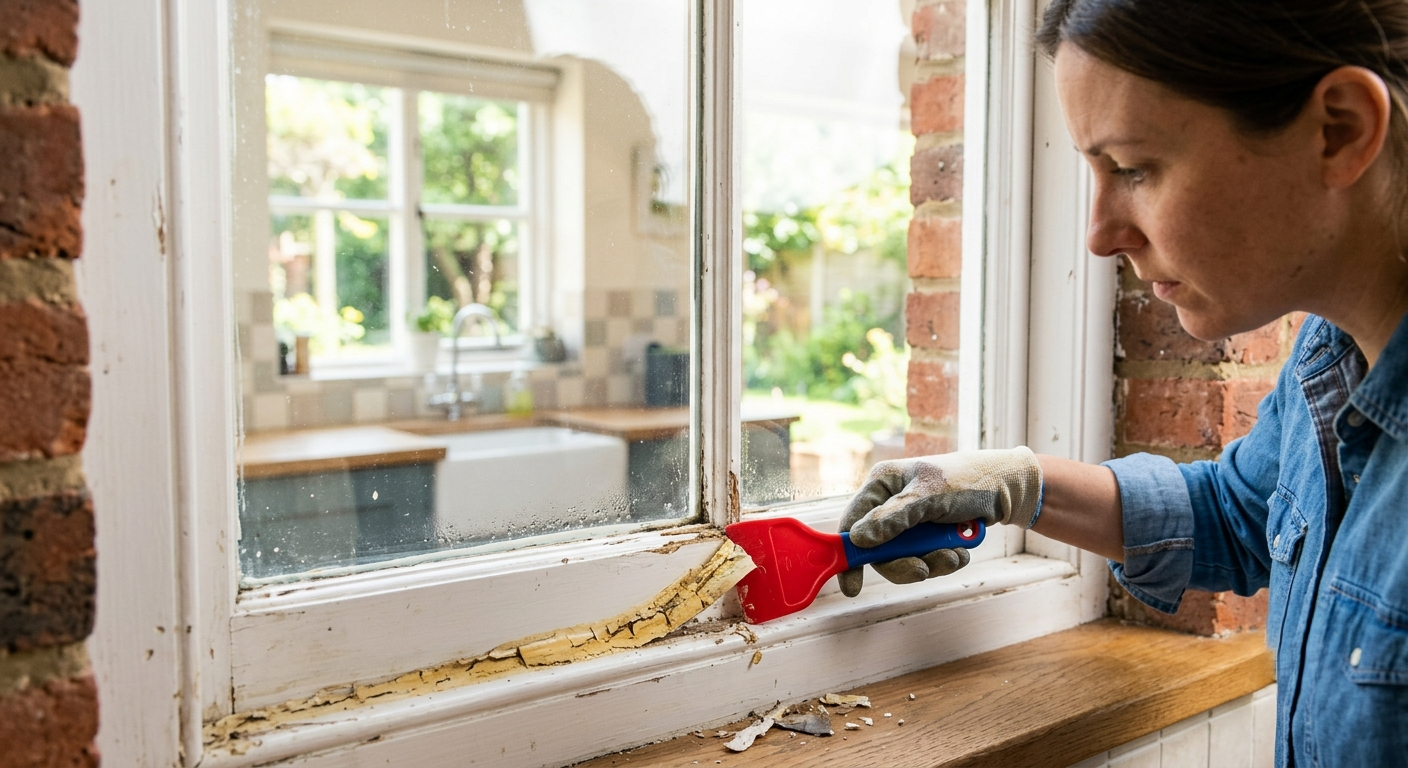
Windows take a beating from weather, sun exposure, and years of expansion and contraction, and the silicone caulk sealing their edges is often the first thing to show it. Cracked, discolored, or shrinking caulk doesn’t just look worn — it lets in drafts, moisture, and eventually water damage to the surrounding frame. Before you can reseal a window properly, you need to remove old silicone caulk from windows completely, without damaging the frame, glass, or paint underneath.
This guide covers the most effective, damage-free method for stripping old caulk from window frames, along with the tools, techniques, and mistakes to avoid.
Key Takeaways
- Softening old caulk before cutting reduces the risk of gouging window frames or glass.
- A caulk removal tool or plastic scraper is safer than a metal blade on painted or vinyl frames.
- All old caulk residue must be removed for new sealant to bond properly.
- Different window frame materials (wood, vinyl, aluminum) require slightly different care.
- Cleaning and drying the frame fully before resealing prevents premature caulk failure.
Why Removing Old Caulk Properly Matters
Old silicone caulk that’s cracked or pulling away from a window frame has already lost its watertight seal, meaning moisture can seep behind it and cause hidden damage to wood framing or drywall over time. Simply layering new caulk over the old bead might look fine short-term, but it rarely holds — new silicone doesn’t bond well to old, cured silicone, so the seal fails again within months.
Taking the time to remove old silicone caulk from windows fully, down to a clean surface, is the only way to guarantee the new seal will actually last.
Tools You’ll Need
- Caulk removal tool or plastic scraper
- Sharp utility knife
- Heat gun or hairdryer
- Isopropyl alcohol or dedicated silicone remover
- Microfiber cloths
- Rubber gloves and safety glasses
- Painter’s tape (for the new caulk line)
Step-by-Step: How to Remove Old Silicone Caulk from Windows
Step 1: Score the Caulk Line
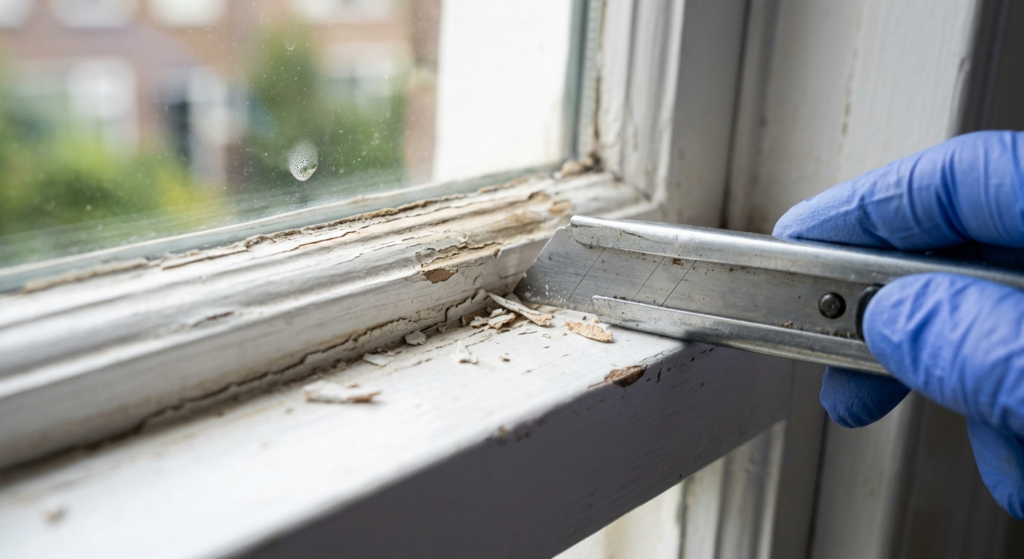
Using a sharp utility knife, run a clean cut down both sides of the caulk bead, where it meets the window frame and the glass or trim. This separates the caulk from both surfaces at once, making it far easier to remove in longer, cleaner strips instead of picking it apart piece by piece.
Keep the blade angle shallow to avoid nicking painted wood trim or scratching glass along the edge.
Step 2: Soften the Old Caulk
Old, fully cured caulk is often stiff and brittle, which makes it prone to snapping into small pieces rather than pulling away in one strip. Softening it first makes a noticeable difference:
- Heat gun or hairdryer: Apply gentle heat for 1–2 minutes along the bead to make it more pliable.
- Silicone remover gel: Apply directly to the caulk and let it sit for 10–15 minutes before scraping.
This step is especially important on window frames exposed to direct sunlight, where the caulk tends to harden faster than in shaded areas.
Step 3: Scrape Away the Bulk of the Caulk
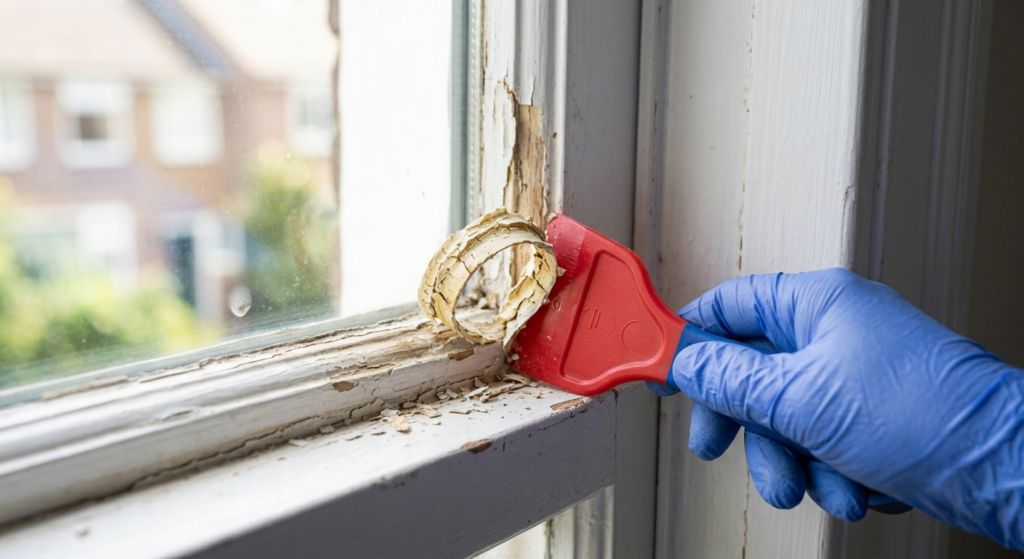
Using a plastic caulk removal tool or scraper, work along the scored line at a low angle, applying steady, even pressure. Avoid digging the corner of the tool into the frame, which can leave gouges in wood or scuff marks on vinyl.
For stubborn sections, reapply the softening product rather than pressing harder with the scraper.
Step 4: Remove Residual Film
Once the bulk of the old caulk is gone, a thin film almost always remains stuck to the frame and glass edge. Dampen a microfiber cloth with isopropyl alcohol and wipe the area in small sections, letting it sit briefly on stubborn spots before wiping again.
Step 5: Clean and Dry the Frame Completely
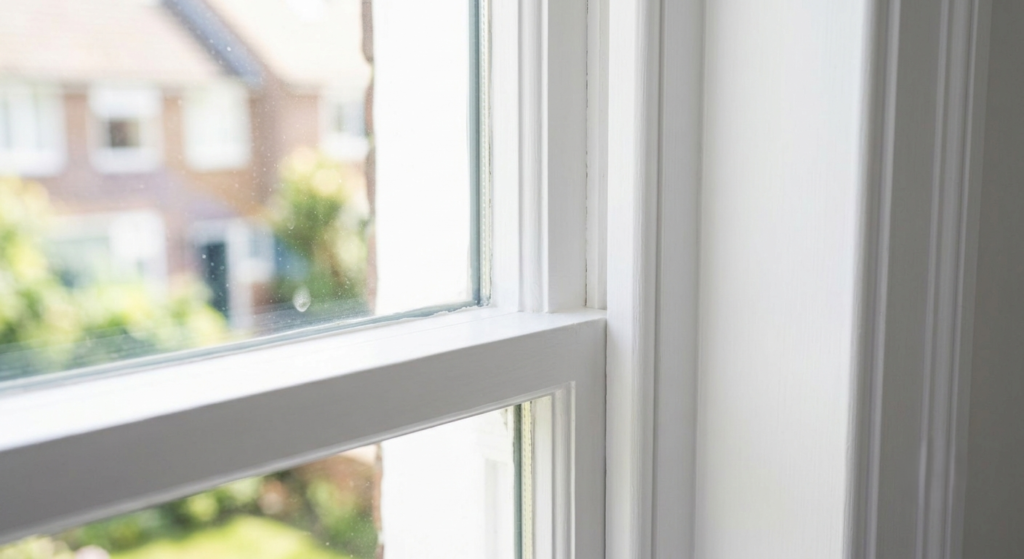
Wipe down the entire window frame with a clean, dry cloth, then allow it to air dry for at least an hour before applying new caulk. Any leftover moisture or oily residue will prevent the new silicone from bonding properly, leading to an early seal failure.
Removing Caulk from Different Window Frame Materials
- Wood frames: Use plastic tools only; metal scrapers can gouge and scratch painted or stained wood.
- Vinyl frames: Isopropyl alcohol is safe, but avoid strong solvents that can dull or discolor vinyl finishes.
- Aluminum frames: More resistant to scratching, but still avoid abrasive pads that can dull the finish.
- Glass edges: Always use a plastic blade at a low angle to avoid scratching the glass surface.
Common Mistakes to Avoid
- Caulking over old sealant. This almost always fails faster than a properly stripped and resealed surface.
- Using a metal blade on painted wood. This risks gouging the frame and creating an uneven surface for new caulk.
- Not letting the frame dry fully. Trapped moisture behind fresh caulk is a common cause of mold and premature failure.
- Skipping the scoring step. Trying to peel caulk without cutting the edges first usually leaves more residue behind.
Conclusion
Knowing how to remove old silicone caulk from windows properly is the foundation of a long-lasting reseal. Scoring the caulk line, softening it, scraping carefully at a low angle, and fully cleaning the frame before it dries are the steps that make the biggest difference between a seal that lasts for years and one that fails within months. With the right tools and a bit of patience, this is a job any homeowner can handle without professional help.
Frequently Asked Questions
What is the best tool to remove old caulk from window frames? A plastic caulk removal tool or scraper is the safest option, since it lifts old caulk without gouging painted wood, vinyl, or scratching glass edges.
Do you need to remove all the old caulk before applying new caulk? Yes, new silicone caulk doesn’t bond well to old, cured caulk, so leaving any residue behind usually causes the new seal to fail early.
Can you use a hairdryer to soften old window caulk? Yes, applying gentle heat with a hairdryer for a minute or two makes stiff, brittle caulk easier to scrape away without cracking into small, hard-to-remove pieces.
How do you remove caulk residue from window glass? Isopropyl alcohol applied with a microfiber cloth effectively dissolves thin caulk residue left on glass after the bulk of the bead has been scraped away.
How long should a window frame dry before applying new caulk? Allow at least an hour of air drying in a well-ventilated area to ensure no moisture remains, which is essential for the new caulk to bond and cure properly.